
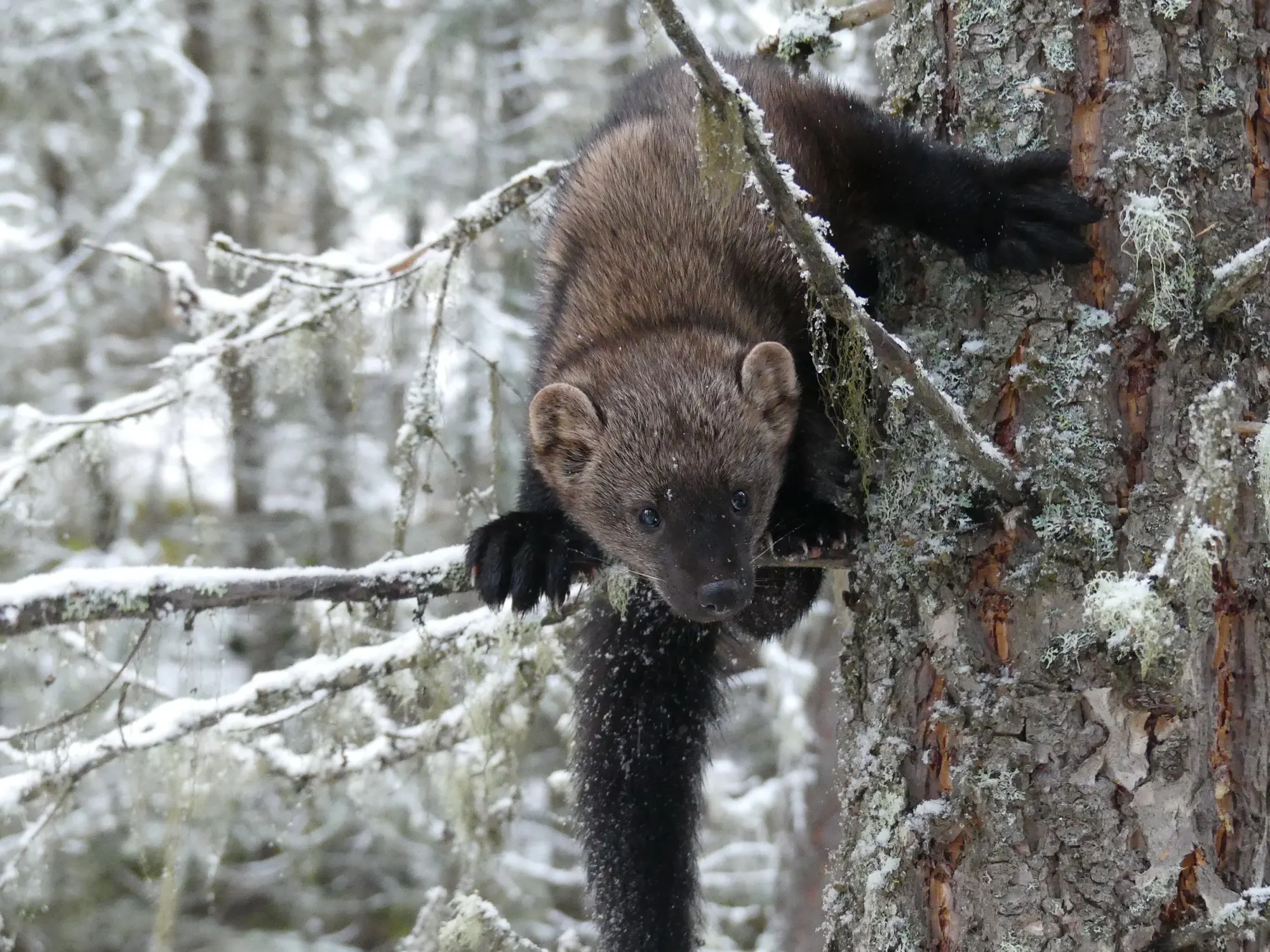
Guloninae
Journal of the Martes Working Group
Photograph: Shannon Werden
I have a manuscript
What the journal publishes, what you need to prepare, what it costs and where it goes. Everything in one place.
Read this firstI want to read the journal
Every article, free, with its DOI, its full text and the complete record of its peer review.
See the articlesI want to know what this is
The scope, the editorial board, how the review works, and how work published here is found.
About GuloninaeGuloninae is the official, peer-reviewed publication of the Martes Working Group.
The MWG was founded in 1993 to bring together scientists, wildlife managers, conservation practitioners, and policy makers dedicated to understanding and protecting the Martes species complex. The journal provides a truly international platform for the exchange of rigorous, high-quality knowledge on all aspects of the biology, ecology, conservation, and management of species within the Guloninae — the subfamily of the mustelid family Mustelidae — martens (Martes spp.), fishers (Pekania spp.), tayras (Eira spp.), and wolverines (Gulo gulo).
Our aim is to foster communication and collaboration among researchers, conservation practitioners, wildlife managers, and policy makers working with Guloninae species worldwide. By publishing original research articles, reviews, short communications, applied case studies, and perspectives, Guloninae advances both scientific understanding and practical approaches for these carnivores in natural and human-modified ecosystems.
By facilitating the dissemination of both cutting-edge science and practical experience, Guloninae seeks to strengthen the evidence base for conserving these species, support global collaboration, and elevate the profile of Guloninae species in both the research and management communities.
The MWG organizes an International Symposium every 3–5 years. Guloninae is envisioned as a central forum within the MWG to sustain and expand knowledge-sharing between symposia, newsletters, and working-group initiatives. The journal is published by Stacks Journal, Inc. on the Working Group’s behalf.
Open access
Free to read, download and reuse under CC BY 4.0. Authors keep their copyright. No subscription, no paywall, ever.
Peer review in the open
A panel reads each manuscript double-blind and works through it together rather than filing separate reports. Every round is published with the article.
Published continuously
One article at a time, on the day it is ready. No volumes and no issues. Each is cited by its own number, as Guloninae: 48213.
Free for members
Active members of the Martes Working Group publish free as part of their membership. Non-members pay $399 per manuscript.
The first article
Guloninae has not published its first article yet. Each one will appear here on the day it is published, with its DOI, its full text, its PDF and the complete record of its peer review.
If you have a manuscript
Everything an author needs, in one place.
What does Guloninae publish?
Original research articles, reviews, short communications, applied case studies, and perspectives — on all aspects of the biology, ecology, conservation, and management of the Guloninae.
- Ecology, behavior, and life history
- Population biology, genetics, and evolutionary history
- Conservation biology, recovery, and threat assessment
- Human–wildlife interactions, conflict mitigation, and coexistence
- Habitat use, landscape ecology, and connectivity
- Physiology, health, disease, and stress ecology
- Monitoring techniques, field methods, and emerging technologies
- Policy, wildlife management, community engagement, and applied conservation
On length, there are two shapes: two-pagers under 1,200 words — a result, a method or a dataset reported without the apparatus of a full paper — and long-form articles over 1,200 words, at whatever length the work needs.
What does it cost?
Active members of the Martes Working Group can publish in Guloninae for free as part of their membership benefits. Non-members may submit manuscripts for peer review and publication for only $399.
How does peer review work?
Your manuscript is read double-blind by a panel of reviewers who work through it together in one shared document, rather than filing separate reports. Every round is published alongside the article, so you will be asked at submission for your consent to that.
How peer review works at Stacks Journal, which runs the review for Guloninae.
How long does it take?
Guloninae follows Stacks Journal’s editorial policies, which publish their own timetable: a desk check within ten days of submission, then two weeks for the reviewers to read independently and two more for their shared discussion. A first decision follows roughly six weeks after the article goes out for review.
If the reviewers ask for revisions, authors have 42 days to make them.
These are Stacks Journal’s published figures, not an estimate for this journal — Guloninae has no record of its own yet.
Is it open access?
Yes, and there is no other option. Every article is free to read, download and reuse under a CC BY 4.0 license from the day it is published. There is no subscription and no paywall, and the authors keep their copyright.
How do I submit?
There are no formatting requirements — no template, no reference style, no figure specification. Submit the manuscript as you have it; the journal typesets it after acceptance.
The journal’s submission system is not open yet. To ask about submitting a manuscript, write to info@martesworkinggroup.org.
How is work published here found?
Every article is assigned a DOI, registered with Crossref — the registry that makes the DOI resolve and distributes each article’s metadata to the services that read its records. Every article page carries the metadata Google Scholar reads.
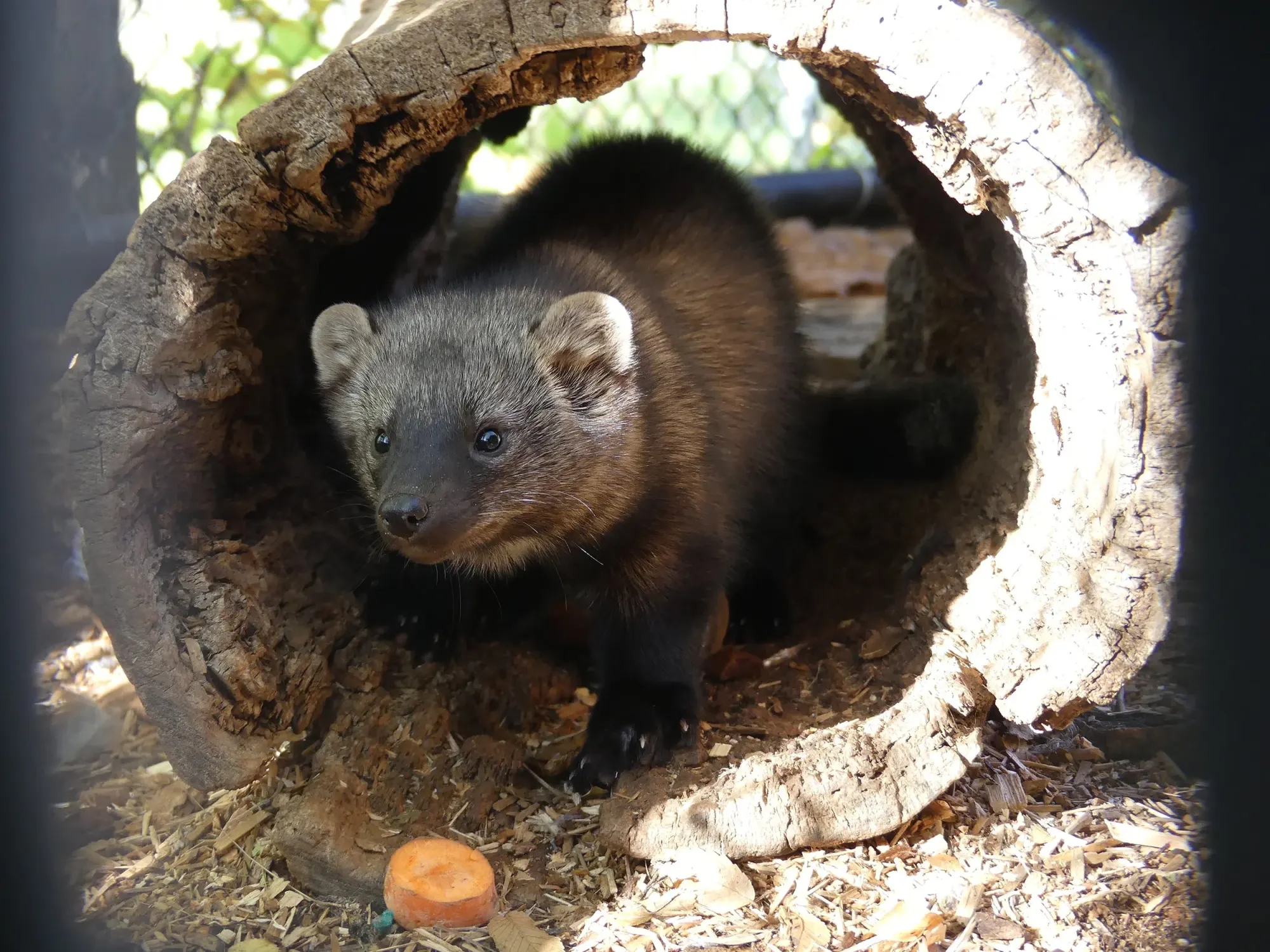
Editorial board
Joanna Burgar
Editor-in-Chief
British Columbia Ministry of Water, Land and Resource Stewardship
Fisher population dynamics, habitat modelling
Angela Fuller
U.S. Geological Survey and Cornell University
Carnivore conservation, decision science, spatial ecology
Jenny Macpherson
Vincent Wildlife Trust
Small carnivores, European pine marten, reintroduction science
Katie Moriarty
NCASI
Forest-associated species, GPS collars, movement ecology
Lizzie Croose
British Small Animal Veterinary Association
Martes ecology, mustelid monitoring
Scott Brainerd
University of Inland Norway
European pine marten biology, conservation policy